
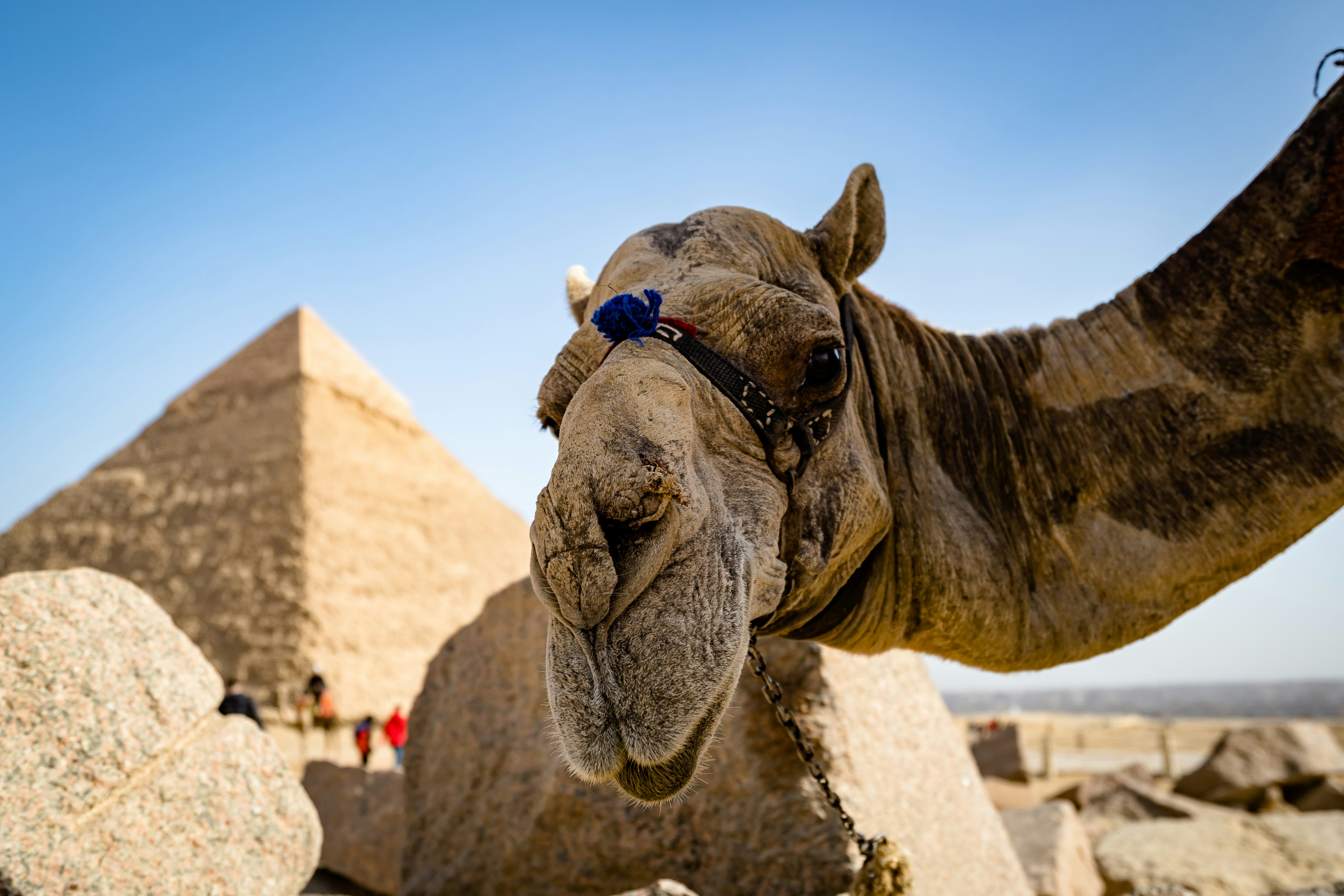
Before 1841, leisure travel was reserved for the wealthy. Aristocratic young men from northern Europe spent one to several years on the Grand Tour, an educational circuit through France and Italy that became fashionable from the mid-1600s, while everyone else who traveled did so for pilgrimage, trade, or necessity, arranging each leg of transport, lodging, and food themselves. [1]
The earliest recordings of packaged travel
Long before anyone sold a holiday, the Hajj pilgrimage to Mecca was moving enormous numbers of people across continents along established routes. Pilgrims traveled together in caravans for safety, sometimes several thousand strong by the time they reached Cairo, and stayed in caravanserai, purpose-built structures that housed travelers, their animals, and their goods around enclosed courtyards. Professional guides known as mutawwifs handled the logistics and rituals of the pilgrimage for arriving travelers, a role that closely resembles the modern ground operator. [2]
The commercial version started in England. On July 5, 1841, Thomas Cook organized a one-day rail excursion from Leicester to a temperance meeting in Loughborough, about 12 miles away, carrying roughly 485 to 500 passengers. Each paid one shilling, which covered the round-trip train fare, a meal, and a brass band. [3] It wasn't a vacation in the modern sense, it was a temperance-movement outing, but it established the core tour operator model: bundle transport, food, and logistics into one price, sold to a group. Cook ran trips for temperance societies and Sunday schools until 1845, when he launched his first commercial, profit-seeking tour to Liverpool. By the 1860s he was selling tours to continental Europe, Egypt, and the Holy Land, and had built what is widely considered the first mass-tourism operation in history. [4]
Japan approached the same problem from the other direction, treating inbound tourism as national policy. The Kihin-Kai, or Welcome Society of Japan, formed in 1893 to promote foreign tourism at a time when perhaps 10,000 Westerners visited the country each year. In 1912 the government and the private sector jointly founded the Japan Tourist Bureau, known today as JTB, specifically to attract and serve international visitors. [5] That is a coordinated national inbound strategy roughly 60 years before the term “destination management company” was coined.
The retail travel agency takes shape (1915)
Package tours were one half of the emerging travel business. The other was the retail agency, and American Express became one of its earliest giants almost by accident. In 1915 the company opened a travel department selling rail and steamship tickets and arranging guided tours, and within a decade it was organizing trips to Europe, South America, the Far East, and the West Indies. [6] The division turned out to matter more than anyone expected. When the U.S. government nationalized American Express's domestic express business during World War I, travel was one of the operations that kept the company alive. [6]
The first flight packages and the jet age boom (1930s–1970s)
In the late 1930s, Thomas Cook the company began selling package holidays that combined flights, accommodation, and transfers, departing from London's Croydon Airport for the South of France, an early version of the flight-plus-hotel format still dominant today. [7] However, the modern package tour industry really began in 1950, when Vladimir Raitz of Horizon Holidays ran the first commercial charter-flight package holiday from the UK to Corsica, carrying 11 passengers at an all-inclusive price under £35. [7]
Commercial jet travel in the 1960s cut flight times and costs dramatically, which let operators sell Mediterranean packages cheaply and at volume. Companies like Thomson and Airtours built their businesses on all-inclusive vacations bundling flights, hotel, transfers, and sometimes meals at a fixed price, and within a decade quiet coastlines in Spain and Greece had become mass destinations. [7]
The inbound and outbound split, and the birth of the DMC (1960s–1970s)
Selling a holiday in London and delivering it in Spain are two different businesses, and by the 1960s the industry had begun dividing along that line. Local companies known as ground operators set up in major cities to handle airport pickups, transportation, and activities for arriving groups, working on behalf of the operators who had sold the trip in the first place. [8] Meeting and convention planners soon wanted more from them: custom activities, themed events, and programs for accompanying spouses and guests.
The term destination management company, or DMC, was coined in the early 1970s to describe that expanded role. Credit for it is contested among several figures in the industry, but the documented milestone came in 1974, when Phil Lee persuaded the San Diego Convention and Visitors Bureau to formally adopt the term, distinguishing the destination expert from the basic ground services agency. [9] DMCs multiplied through the incentive travel boom of the 1980s. [8]
That division still defines the industry today. Outbound operators sell in their home market and take travelers elsewhere, while inbound operators and DMCs specialize in receiving travelers into a destination they know intimately.
The industry organizes itself around trust (1950s–1970s)
As the business scaled, it professionalized. The National Tour Association (NTA) formed in 1951, one of the earliest trade groups for the U.S. tour industry. [10]
The United States Tour Operators Association (USTOA) followed in 1972, founded by a small group of California tour operators who were alarmed by a wave of industry bankruptcies that left travelers stranded or unpaid. [11] The association went national in 1975, adopted the motto “Integrity in Tourism,” and in 1976 created the industry's first consumer protection fund, a direct response to the trust problem that had prompted its founding. That fund was formalized in 1997 as the $1 Million Travelers Assistance Program, under which each member sets aside $1 million of its own funds to reimburse consumers if the company fails. [11]
Airline deregulation (1978)
The Airline Deregulation Act of 1978 ended 40 years of federal control over U.S. airline routes and fares, allowing airlines to compete on price for the first time. [12] Airfares fell roughly 45% in real terms in the years that followed, and the number of Americans flying annually has more than doubled since. [12] Cheap and plentiful flights became the foundation the contemporary travel industry is built around.
The internet unbundles the travel agent (1995–2002)
For 150 years, the core thing operators and agents sold was access: to fares, routes, and destinations an ordinary traveler could not easily reach alone. Two things dismantled that in quick succession.
The first was a change in how agents got paid. In February 1995, Delta capped base travel agent commissions at 5%, down from 10%, and the other major carriers followed within days. [13] The cuts continued for seven years, and in March 2002 eight of the ten largest U.S. airlines eliminated base commissions on airline tickets entirely. [13] Agencies that had built their businesses on ticketing revenue lost that revenue outright.
The second was the internet. In 1996 Microsoft launched Expedia and a separate venture launched Travelocity, both designed to let travelers book flights, hotels, and cars directly, and Priceline followed in 1998. [14] Consumers could now reach the same reservation systems agents had once monopolized.
The contraction that followed was severe. The number of U.S. retail travel agency locations fell 59% between 1997 and 2013, from 22,938 to 9,387, and full-time travel agent employment dropped from a peak of 124,000 in 2000 to 82,000 by 2019. [15] Tour operators came through the period in better shape than agencies did, because a designed and negotiated multi-day itinerary was harder to reproduce with a search box than a plane ticket was.
The travel industry today
Travel is now one of the largest industries in the world. International tourist arrivals reached 1.52 billion in 2025, up 4% on the previous year and roughly 60 million more travelers than in 2024. [16] Europe remains the most visited region with 793 million arrivals, while Africa recorded the fastest growth. [16] Travel and tourism contributed a record $11.6 trillion to global GDP in 2025, about 9.8% of the world economy, and supported 366 million jobs. [17]
The businesses inside that industry are numerous and mostly small. Business database Tracxn counts 51,216 companies globally in the tour operators sector, led by the United Kingdom, India, and the United States. [18] IBISWorld puts the U.S. tour operator industry at 3,568 businesses generating $12.7 billion in 2026. [19] The travel agency side employed roughly 1.2 million people worldwide in 2023, and the global travel agency services market was valued at $518.8 billion in 2025. [20]
Travel advisors did not disappear after the internet, they changed shape. The U.S. Bureau of Labor Statistics counts 58,250 employed travel agents, a figure that excludes the self-employed, while the American Society of Travel Advisors (ASTA) says it and its affiliates represent about 190,000 travel advisors in the United States, most of them independent. [21]
Sources
1. Britannica, "Grand tour": https://www.britannica.com/topic/grand-tour
2. Smithsonian Institution, "Journey to Mecca: In the Footsteps of Ibn Battuta" (educator guide): https://www.si.edu/Content/SE/Educator%20Guides/Journey-to-Mecca.pdf
3. History Hit, "Thomas Cook and the Invention of Mass Tourism in Victorian Britain": https://www.historyhit.com/thomas-cook-invention-of-tourism/
4. CNN Travel, "Thomas Cook: A history of one of the world's oldest travel firms": https://www.cnn.com/travel/article/thomas-cook-history-timeline/index.html
5. Japan Travel Bureau Foundation, "History": https://www.jtb.or.jp/en/about/history
6. Britannica Money, "American Express Company": https://www.britannica.com/money/American-Express-Company
7. Jamie Wake Travel, "The History and Evolution of Package Holidays": https://www.jamiewaketravel.co.uk/2025/02/14/the-history-and-evolution-of-package-holidays-and-jamie-wake-travels-role-in-the-industry
8. AltexSoft, "Destination Management Companies": https://www.altexsoft.com/blog/destination-management-companies/
9. Padraic Gilligan, "40 Years of Growth: The Art and Science of the DMC," Kongres Magazine: https://padraicino.com/40-years-of-growth-the-art-and-science-of-the-dmc/
10. National Tour Association: https://ntaonline.com/
11. USTOA, History of USTOA: https://ustoa.com/history
12. Smithsonian Air & Space Magazine, "Airline Deregulation: When Everything Changed": https://airandspace.si.edu/stories/editorial/airline-deregulation-when-everything-changed
13. TravelPulse, "Twenty Years After the Commission Caps": https://www.travelpulse.com/voices/opinions/twenty-years-after-the-commission-caps
14. The History of the Web, "It's 1997 and You Want to Take a Flight": https://thehistoryoftheweb.com/its-1997-and-you-want-to-take-a-flight/
15. Stripe Economics (Ernie Tedeschi), "The Decline of Travel Agents" (citing U.S. Bureau of Labor Statistics data): https://www.stripeeconomics.com/p/the-decline-of-travel-agents
16. UN Tourism, "International tourist arrivals up 4% in 2025": https://www.untourism.int/news/international-tourist-arrivals-up-4-in-2025-reflecting-strong-travel-demand-around-the-world
17. WTTC, "Travel & Tourism Sees Best Year Ever and Emerges as the World's Fastest Growing Sector": https://wttc.org/news/travel-tourism-sees-best-year-ever,-outpacing-the-global-economy-in-2025
18. Tracxn, "Top Companies in Tour Operators Worldwide": https://tracxn.com/d/sectors/tour-operators/__KdZTuMEBXLiYlgcPnT8zTkWcU5iuiAi00niVQPh5x9o/companies
19. IBISWorld, "Tour Operators in the US Industry Analysis": https://www.ibisworld.com/united-states/industry/tour-operators/1482/
20. Future Market Insights, "Travel Agency Services Market": https://www.futuremarketinsights.com/reports/travel-agency-services
21. Host Agency Reviews, "Travel Agent Career Outlook" (citing BLS and ASTA figures): https://hostagencyreviews.com/blog/travel-agent-career-outlook